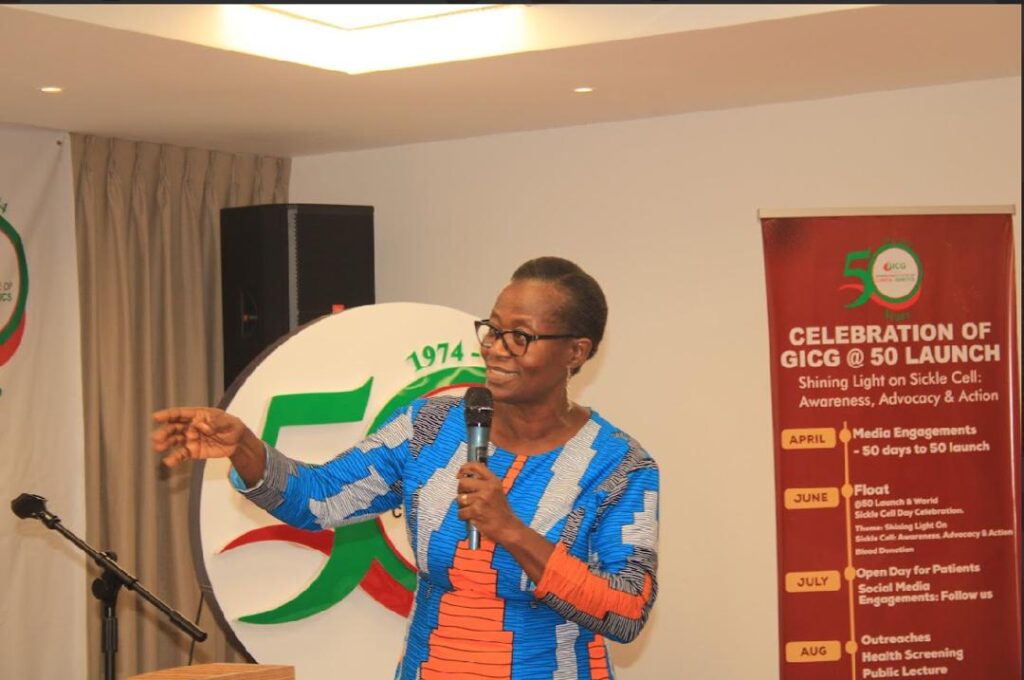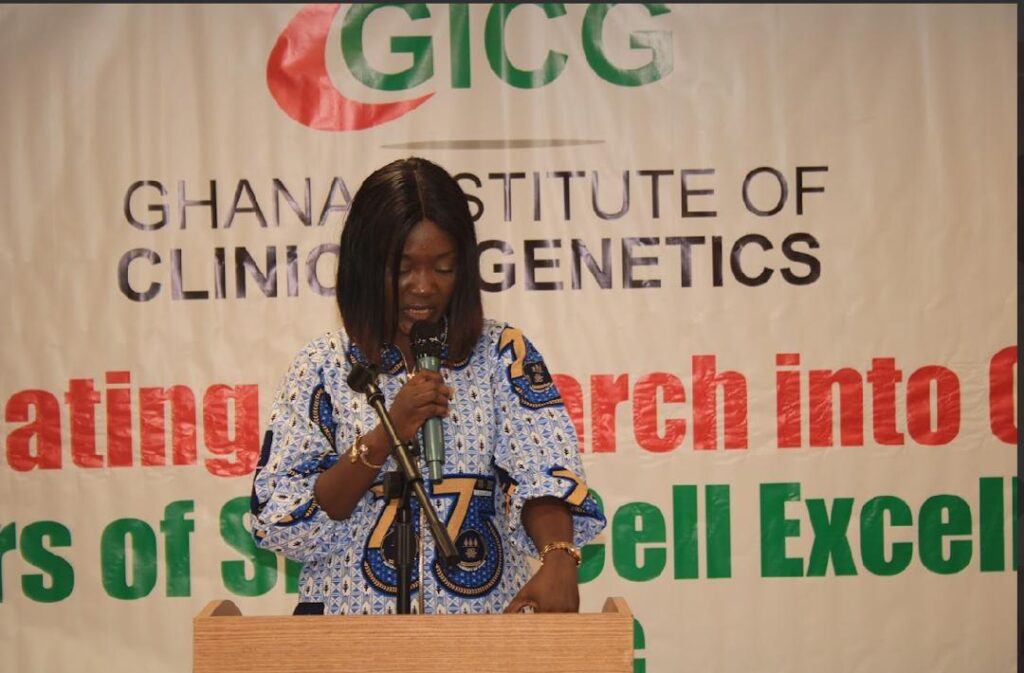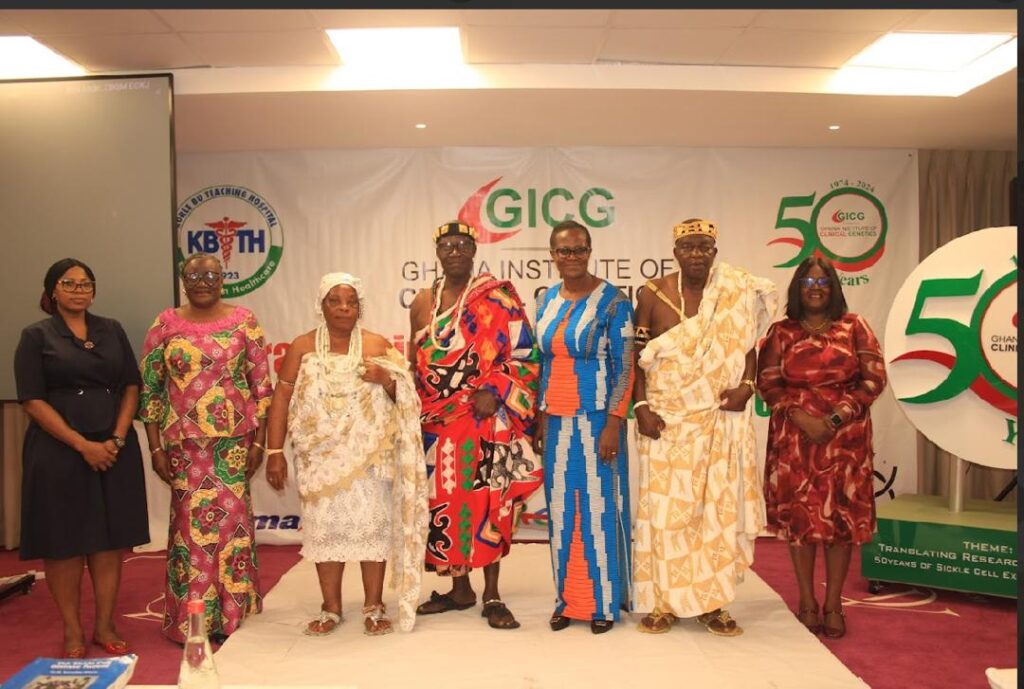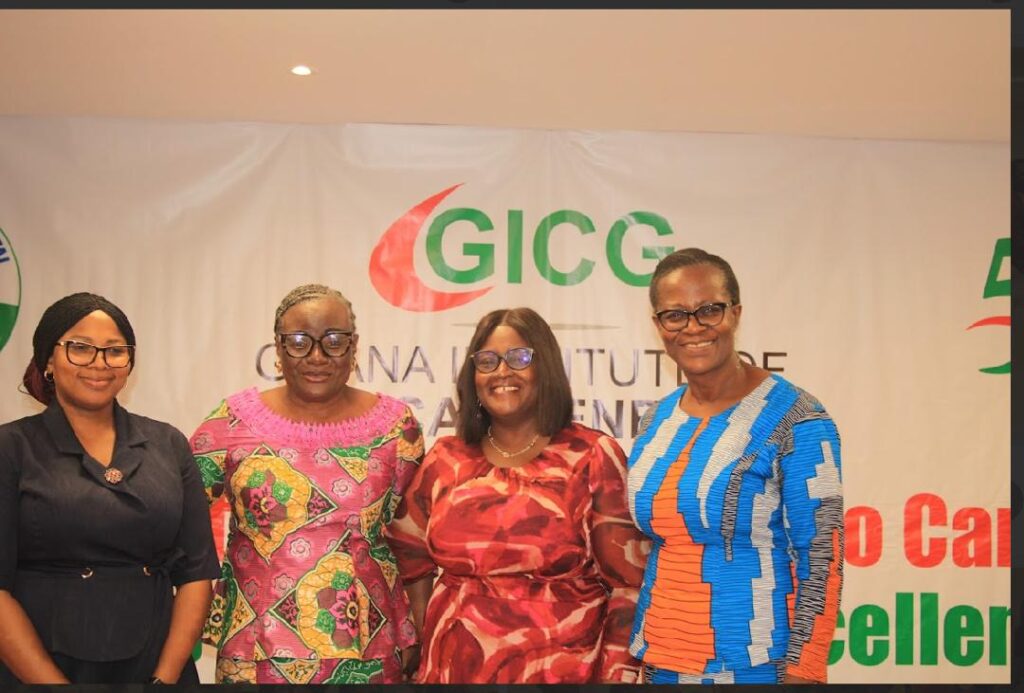
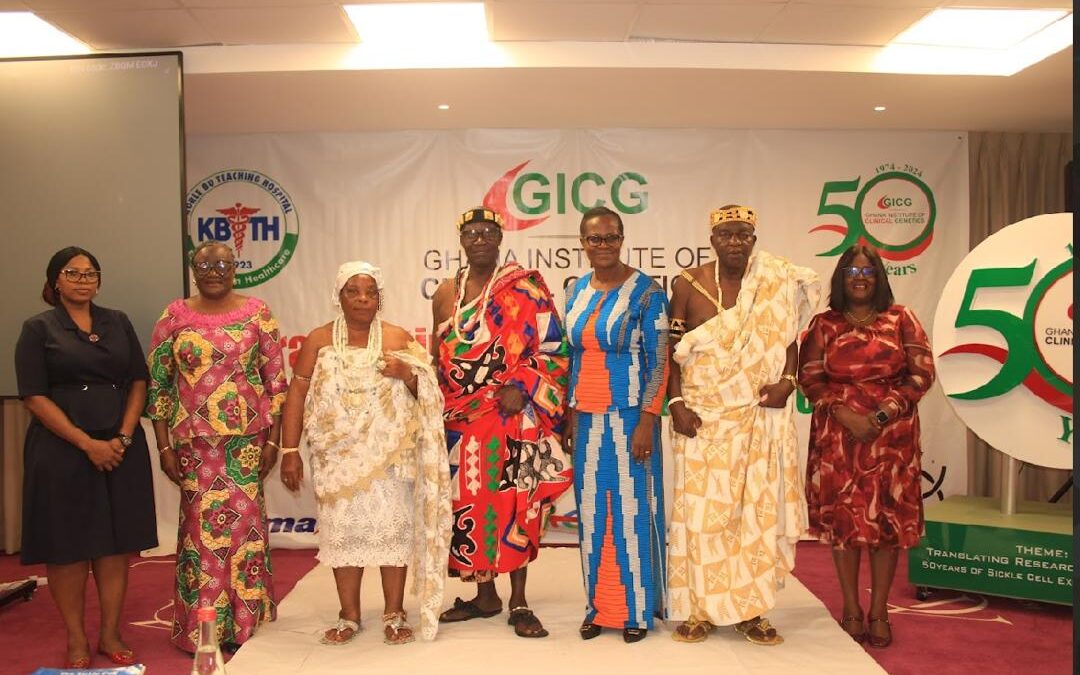
As part of activities marking the 50th anniversary of the Ghana Institute of Clinical Genetics at the Korle Bu Teaching Hospital, a public lecture was held on 29th August 2025 at the Accra City Hotel, under the theme: “Translating Research into Care.”
In her welcome address, the Director of the Department, Dr Amma Benneh Akwasi -Kuma, expressed pride in the institute’s five-decade journey of caring for individuals living with sickle cell disease. She emphasised that the clinic was founded with the profound mission of supporting patients and advancing research, and today stands as a beacon of excellence.
Dr Benneh Akwasi -Kuma highlighted the importance of bridging the gap between research and patient care, stating that research must not end in journals or conference halls but should be translated into action ,enabling early diagnosis, guiding better treatment, and improving lives.
The guest speaker, Professor Ivy Ekem, delivered a comprehensive and enlightening presentation on sickle cell disease (SCD). She explained that sickle cell disease is a hereditary blood disorder, inherited equally from both parents, and cautioned against assigning blame to either parent.
She advised the public to refrain from labelling people as “sicklers”—a term that can stigmatise. She explained that individuals with sickle cell disease have abnormal haemoglobin variants, which compromise their ability to carry oxygen efficiently, leading to various health challenges.
On nutrition and lifestyle, Professor Ekem recommended natural sources of vitamin C—particularly fresh fruits and vegetables—over processed drinks. She advised patients to prioritise wholesome meals, adequate hydration, and avoidance of extreme temperatures, strenuous activities, and infections. She emphasised that nutrition and cognitive well-being should be central in discussions between doctors and patients to promote optimal haemoglobin levels.
Professor Ekem applauded the accomplishments of the Clinical Genetics Unit over its 50 years but stressed the need for continued progress. She called for clinically driven research, rather than grant-driven studies, and urged increased national funding to support relevant and impactful scientific work.
Professor Ekem expressed optimism that by the institute’s 100th anniversary, individuals living with sickle cell disease would be identified through laboratory diagnosis rather than physical features or social status.